
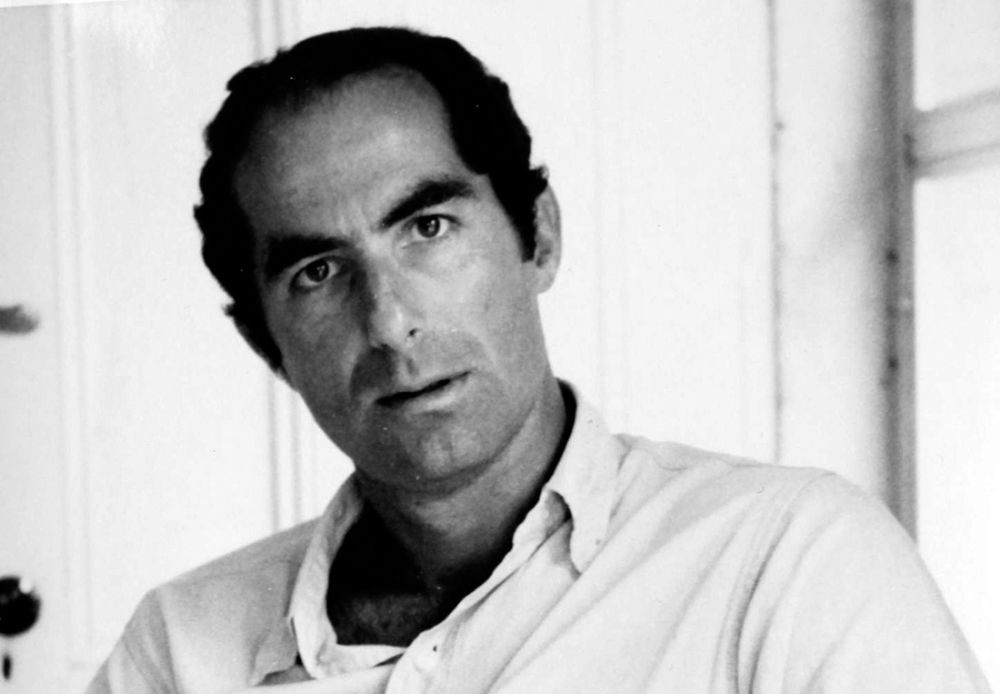
Born on March 19, 1933, Philip Roth spent more than half a century transforming the anxieties, ambitions, appetites, contradictions, and reinventions of American life into fiction. Newark neighborhoods, Jewish families, sex, marriage, illness, politics, literary ambition, aging, historical upheaval, and the unreliable stories people tell about themselves all became material for a novelist who rarely allowed his characters—or his readers—to settle comfortably into a single explanation.
Roth could be ferociously funny, deliberately provocative, intellectually demanding, and unexpectedly tender. His 1959 debut, Goodbye, Columbus, won the National Book Award, while Portnoy’s Complaint made him a literary celebrity and cultural controversy ten years later. The decades that followed brought Nathan Zuckerman, The Counterlife, Patrimony, Sabbath’s Theater, American Pastoral, I Married a Communist, The Human Stain, The Plot Against America, Everyman, and a remarkable sequence of late novels examining mortality and the collapse of certainty. By the time of his death in 2018, Roth had become one of the most decorated American fiction writers of his generation.
🏙️ Growing Up in Newark
Philip Milton Roth was born in Newark, New Jersey, and grew up in the city’s Weequahic neighborhood, a predominantly Jewish middle-class community that would remain one of the foundational landscapes of his imagination. His father, Herman Roth, worked in insurance, while his mother, Bess, managed the household. Philip and his older brother, Sandy, grew up within a family deeply invested in education, respectability, hard work, and the opportunities offered by American life.
Newark became for Roth what Dublin was for James Joyce or Yoknapatawpha County was for William Faulkner: a place sufficiently specific to become universal. Streets, schools, shops, family expectations, ethnic divisions, neighborhood reputations, and memories of childhood would return repeatedly in his fiction. Even when Roth’s novels moved elsewhere, the psychological landscape of Newark often remained nearby.
The neighborhood also gave Roth his first sustained experience of what would become one of his central subjects: the complicated process by which immigrant families and their children negotiate American identity. Assimilation could represent opportunity, but it could also produce anxiety about what was being left behind. Success promised freedom while creating new pressures to behave correctly, marry appropriately, and avoid embarrassing the community.
Roth would spend decades turning those tensions into fiction.
🎓 Bucknell and the University of Chicago
After graduating from Weequahic High School in 1950, Roth attended Bucknell University in Pennsylvania, where he studied English and became increasingly serious about writing. He graduated in 1954 and continued his education at the University of Chicago, earning a master’s degree in English literature.
Chicago brought Roth into a more intensely literary environment. He began publishing stories and essays in magazines while studying and teaching, gradually discovering that the material closest to him—Jewish American family life, social aspiration, sexuality, embarrassment, class differences, and the gap between public respectability and private desire—could provide the foundation for serious fiction.
Roth’s formal training in literature mattered, but so did his instinct for comedy. His fiction would rarely separate intellectual seriousness from ridicule. A character could be thinking about identity, morality, history, or mortality while simultaneously behaving absurdly.
That tonal mixture became one of his signatures. Roth’s America is often funniest at precisely the moment it is most anxious about being taken seriously.
📚 Goodbye, Columbus
Roth’s first book, Goodbye, Columbus and Five Short Stories, appeared in 1959 when he was twenty-six. The title novella follows Neil Klugman, a young man from working-class Newark, and Brenda Patimkin, whose wealthy suburban Jewish family represents a world of social mobility and material comfort very different from Neil’s own.
The story allowed Roth to explore class divisions within Jewish American life rather than presenting Jewish identity as a single experience. Wealth, assimilation, education, family expectations, and social insecurity move beneath the romantic relationship, turning what might have been a conventional love story into a sharper examination of postwar American aspiration.
The collection won the 1960 National Book Award for Fiction, an extraordinary beginning for a first book. The National Book Foundation describes it as work of explosive wit that explored conflicts within Jewish American communities, including differences between generations and social classes.
Success arrived quickly.
So did controversy.
✡️ Criticism From Within the Jewish Community
Some Jewish readers and critics reacted strongly against Roth’s early stories, arguing that his depictions of flawed, materialistic, adulterous, hypocritical, or socially ambitious Jewish characters risked reinforcing antisemitic stereotypes.
The criticism affected Roth deeply but did not persuade him that fiction should protect a community by presenting only admirable characters. He resisted the expectation that a Jewish American writer carried responsibility for making every Jewish fictional character representative, exemplary, or culturally reassuring.
This conflict became crucial to his development. Roth increasingly treated the writer’s freedom to portray embarrassment, selfishness, desire, failure, and contradiction as fundamental. If characters were required to represent their communities positively, fiction would become public relations.
His answer was to become even less obedient.
The argument surrounding representation would follow him for decades, later expanding to include criticism of his portrayals of women, sexuality, marriage, and autobiographical material.
📖 Letting Go and When She Was Good
Roth’s first full-length novel, Letting Go, appeared in 1962. It was more expansive and conventionally realistic than the fiction that would later make him famous, examining relationships, marriage, responsibility, and moral entanglement among young intellectuals.
When She Was Good, published in 1967, moved away from the Jewish American milieu most associated with Roth and focused instead on a Midwestern Protestant community. The novel’s darker psychological atmosphere demonstrated that Roth was already resisting attempts to define him too narrowly.
Both books also reflected the influence of his troubled first marriage to Margaret Martinson. The Library of Congress notes that Martinson, whom Roth met in Chicago and later married, influenced characters in When She Was Good and My Life as a Man. The couple separated in 1963, and Martinson died in an automobile accident in 1968.
Roth repeatedly transformed personal experience into fiction, but autobiography in his work rarely remained straightforward. Real experience became something to exaggerate, rearrange, contradict, parody, or place inside layers of invented narration.
Eventually, even a character named Philip Roth would become part of the game.
🔥 Portnoy’s Complaint
Nothing in Roth’s earlier career prepared the wider public for the explosion surrounding Portnoy’s Complaint in 1969.
The novel takes the form of an extended monologue delivered by Alexander Portnoy to his psychoanalyst. Portnoy talks compulsively about his parents, Jewish identity, guilt, sexual obsession, adolescence, masturbation, romantic relationships, and his desperate attempts to escape the psychological forces he believes have shaped him.
The book became a bestseller and a cultural sensation. Its explicit sexual content brought notoriety, while its comedy, verbal energy, and treatment of Jewish family life generated intense admiration and equally intense hostility. The Library of Congress describes the novel as both critically and commercially successful, while the National Portrait Gallery notes the controversy created by its unusually frank treatment of sexuality.
Roth had achieved the kind of fame that can become a trap.
Readers began confusing the writer with his narrator.
The problem fascinated him.
He would spend much of the remainder of his career making that confusion even more complicated.
🎭 The Problem of Autobiography
Roth’s fiction continually tempts readers to ask how much is true.
Characters resemble him.
Writers resemble him.
Newark resembles his Newark.
Marriages, illnesses, travels, acquaintances, and historical experiences sometimes echo elements of his biography.
Then Roth changes something essential.
The result is a body of fiction in which autobiography functions less as confession than as raw material. The writer takes something recognizable and places it inside an invented structure where the distinction between fact and fiction becomes increasingly unstable.
Roth became fascinated with precisely what readers were doing when they tried to reconstruct the author from the work. If readers insisted upon treating fiction as autobiography, he could create fictional versions of himself and make the problem impossible to solve.
Rather than closing the distance between writer and character, autobiographical resemblance widened it.
👤 Nathan Zuckerman Appears
Roth eventually created the character most closely associated with his exploration of authorship: Nathan Zuckerman.
Zuckerman first appeared in Roth’s work in the 1970s and became central to a sequence beginning with The Ghost Writer in 1979. Like Roth, Zuckerman is a Jewish American novelist whose writing causes controversy, creates family conflict, and makes readers wonder where fiction ends and autobiography begins.
The resemblance was deliberate but never complete.
Zuckerman allowed Roth to create an alter ego and then examine him from multiple angles. Sometimes Zuckerman occupies the center of the story. Elsewhere he becomes an observer trying to reconstruct somebody else’s life.
Through him, Roth could ask what writers owe their families, whether imagination constitutes betrayal, how reputations distort people, and whether anyone can ever truly understand another person’s life.
Those questions became increasingly important as Roth matured.
👻 The Ghost Writer
The Ghost Writer, published in 1979, begins one of Roth’s richest periods.
A young Nathan Zuckerman visits the secluded home of E. I. Lonoff, an older writer he reveres. Zuckerman is already in conflict with his own family over a story they believe exposes Jewish people to hostile judgment.
The situation mirrors controversies Roth himself had encountered, but the novel pushes far beyond literary autobiography.
Zuckerman becomes fascinated with a young woman staying in Lonoff’s house and imagines an astonishing identity for her, transforming history itself into literary fantasy.
The book therefore becomes a novel about storytelling rather than merely about a storyteller. Zuckerman sees people and immediately begins creating narratives around them.
That instinct gives the writer power.
It also makes him dangerous.
🔄 The Counterlife
By the time Roth published The Counterlife in 1986, he had begun dismantling conventional narrative certainty almost completely.
Characters appear to die and then return in alternative versions of events. Lives divide into competing possibilities. Nathan Zuckerman becomes both character and interpreter within a book that repeatedly asks whether there is ever a single authentic version of a person.
The formal experimentation matched Roth’s larger philosophical concern.
People continually invent themselves.
Families invent versions of one another.
Nations invent histories.
Writers invent fictional selves.
Readers invent authors from books.
The self, in Roth’s fiction, is rarely a stable object waiting to be discovered. It is an argument conducted over time.
The Counterlife earned Roth the National Book Critics Circle Award and helped confirm that the controversial comic novelist behind Portnoy’s Complaint had become one of the most formally ambitious novelists working in America.
🇨🇿 Prague and the Writers of Eastern Europe
Beginning in the early 1970s, Roth traveled repeatedly to Czechoslovakia, where he met writers whose work had been suppressed under the Communist regime. His contacts included Milan Kundera, Ivan Klíma, and other intellectuals navigating censorship and political surveillance.
The experience broadened Roth’s understanding of what it meant to be a writer. In America, he had fought cultural criticism, moral outrage, and hostile reviews. In Czechoslovakia, he encountered writers whose governments could prevent publication, monitor meetings, restrict travel, and turn literary independence into a political offense.
Roth eventually became general editor of Penguin’s Writers from the Other Europe series, helping introduce English-language readers to Central and Eastern European writers including Kundera, Bruno Schulz, Danilo Kiš, and György Konrád. His visits to Prague continued until Czechoslovak authorities refused him entry, and the experience later entered his fiction through works including The Prague Orgy.
The encounter also complicated Roth’s understanding of literary freedom.
A writer could be attacked for what he published.
Another could be forbidden to publish at all.
👨👦 Patrimony
One of Roth’s most personal books appeared in 1991.
Patrimony: A True Story recounts the illness and death of his father, Herman Roth. Unlike the elaborate fictional mirrors of the Zuckerman books, Patrimony presents itself directly as memoir.
Yet the familiar Roth questions remain.
What does a son inherit from a father?
What happens when the powerful parent of childhood becomes physically vulnerable?
How does one describe illness without reducing the ill person to illness?
Roth writes about bodily deterioration with the same refusal to sentimentalize physical existence that appears throughout his fiction. The book won the National Book Critics Circle Award, becoming one of the major literary successes of his 1990s renaissance.
Family had provided material for Roth from the beginning.
Here the relationship became the story itself.
🎪 Sabbath’s Theater
In 1995, Roth published Sabbath’s Theater, one of his darkest, wildest, and most polarizing novels.
Its protagonist, Mickey Sabbath, is an aging former puppeteer whose appetite for sex, provocation, insult, and self-destruction seems almost limitless. After the death of his longtime lover Drenka, Sabbath spirals through grief, memory, obscenity, rage, and thoughts of death.
The novel contains some of Roth’s most transgressive material, yet underneath the outrageous behavior lies a sustained confrontation with bereavement and mortality. Sabbath’s refusal to behave respectably cannot finally protect him from loss.
Sabbath’s Theater won the 1995 National Book Award for Fiction, thirty-five years after Goodbye, Columbus had given Roth his first National Book Award.
The distance between those books measures an extraordinary transformation.
The young satirist had become an older novelist willing to stare directly at decay.
🇺🇸 American Pastoral
Two years later came American Pastoral, the book that earned Roth the Pulitzer Prize for Fiction.
Nathan Zuckerman attempts to reconstruct the life of Seymour “Swede” Levov, a legendary high school athlete from Newark who appears to embody postwar American success. The Swede has physical beauty, popularity, a prosperous family business, a former beauty-queen wife, and a rural home that seems to promise escape from the tensions of the city.
Then his daughter Merry becomes politically radicalized during the Vietnam era and is implicated in a bombing.
The apparent perfection of the Levov family collapses.
The Pulitzer organization describes the novel as a confrontation between the longing for an ordinary American life and the violent upheavals of the 1960s. American Pastoral received the 1998 Pulitzer Prize for Fiction and became one of the defining works of Roth’s career.
The novel’s title is deliberately ironic.
America keeps promising pastoral innocence.
History keeps entering the backyard.
📕 I Married a Communist
Roth followed American Pastoral with I Married a Communist in 1998.
Again Nathan Zuckerman becomes the listener through whom another person’s life is reconstructed. The novel follows radio star Ira Ringold through radical politics, marriage, betrayal, and the destructive atmosphere of the McCarthy era.
Roth was interested not only in political persecution but in what happens when ideology enters intimate life. Public accusation becomes personal revenge. Political beliefs become weapons inside marriages and friendships.
The book also deepens a pattern running throughout Roth’s later work: individual lives become entangled with particular moments in American history.
History is not scenery.
It enters the family.
🎓 The Human Stain
Published in 2000, The Human Stain completed the loose trilogy often grouped with American Pastoral and I Married a Communist.
Its central figure is Coleman Silk, a classics professor whose career collapses after he is accused of racism over a word he uses in class. Zuckerman gradually learns that Silk has spent much of his adult life concealing a crucial part of his ancestry and racial identity.
The revelation turns the novel into a complex meditation on identity, secrecy, judgment, reinvention, race, academic politics, sexuality, and the impossibility of knowing another person completely.
Roth again refuses easy categories.
A person’s public identity may be carefully constructed.
The private history may contradict it.
The observers who judge that person possess incomplete information.
Yet judgment proceeds anyway.
The Human Stain won the PEN/Faulkner Award, adding another major honor to Roth’s extraordinary sequence of 1990s and early-2000s successes.
🧩 The American Trilogy
Together, American Pastoral, I Married a Communist, and The Human Stain form what became known as Roth’s American Trilogy.
The three novels examine different historical pressures shaping postwar America: the political radicalism of the 1960s and Vietnam era, McCarthyism and anti-Communist hysteria, and late-century conflicts involving race, sexuality, identity, and public scandal.
Yet Roth never writes history from the perspective of presidents or generals.
He works through families, marriages, reputations, careers, secrets, and private disasters.
This approach reflects one of his deepest insights.
Historical forces become real when they enter a person’s life.
Political rhetoric may sound abstract.
Then somebody loses a job.
A family breaks apart.
A daughter disappears.
A secret becomes public.
History suddenly has an address.
🗳️ The Plot Against America
In 2004, Roth published The Plot Against America, perhaps his boldest departure into alternate history.
The novel imagines Charles Lindbergh defeating Franklin D. Roosevelt in the 1940 presidential election and pursuing an isolationist administration increasingly threatening to American Jews. Roth places a fictionalized version of his own childhood family inside this alternative political reality.
The decision to use himself as a child narrator produces an unsettling effect. Familiar Newark streets remain recognizable while American history moves in another direction.
The novel demonstrates Roth’s fascination with contingency.
What if the political assumptions people consider permanent are not permanent at all?
How quickly can a family that believes itself securely American begin questioning whether the country still considers it American?
The book later gained renewed attention because readers saw resonances with subsequent periods of political polarization, although Roth wrote it from the historical materials and anxieties surrounding the 1940s rather than as a prediction of later events.
🧓 Everyman and the Body
As Roth entered his seventies, aging and bodily decline became increasingly central to his fiction.
Everyman, published in 2006, strips away many of the comic defenses associated with earlier books. Its unnamed protagonist looks back upon relationships, betrayals, family, illness, surgery, regret, and the unavoidable approach of death.
The body had always mattered to Roth.
Desire depends upon it.
Embarrassment happens through it.
Sexuality celebrates it.
Disease changes it.
Aging limits it.
Death ends it.
In his later work, the body increasingly becomes the argument no amount of intelligence can win.
Everyman earned Roth another PEN/Faulkner Award, making him the first writer to win that prize three times.
📚 The Final Novels
Roth continued publishing rapidly during the final years of his fiction career.
Exit Ghost returned to Nathan Zuckerman in 2007, presenting the once-vigorous writer as an older man confronting physical decline and the diminished powers of age. Indignation followed in 2008, telling the story of a young man whose rebellion against family and institutional authority unfolds against the Korean War.
The Humbling appeared in 2009, focusing on an aging actor who suddenly loses his ability to perform. Nemesis, published in 2010, returned to wartime Newark during the polio epidemic of 1944, following a playground director confronting fear, illness, responsibility, and guilt.
Taken together, these late books form an extended meditation on diminishment.
Bodies fail.
Careers disappear.
Sexual power changes.
Youth becomes memory.
Death moves closer.
Roth’s late fiction refuses to disguise any of it.
🦠 Nemesis and the Newark of Memory
Nemesis returned Roth to the neighborhood landscape of his childhood more directly than many of his previous novels.
Set during the 1944 polio epidemic, the book portrays a city in which invisible infection transforms summer into an atmosphere of fear. Children who should be playing become potential victims. Parents become suspicious of ordinary contact. A young athletic teacher struggles with questions of responsibility and fate.
Roth published the novel more than six decades after the period it depicts.
That distance is important.
The Newark of childhood had become simultaneously remembered place and fictional territory.
By then Roth had returned to its streets so often in literature that the city belonged to both biography and imagination.
The circle was nearly complete.
✍️ Walking Away From Fiction
After Nemesis, Roth stopped writing novels.
The decision surprised many readers because prolific writers are often expected to continue until death. Roth instead decided that the body of fiction was finished.
He reread his work, assessed what he had done, and stepped away.
The decision fits a writer fascinated by control. Roth had spent decades creating characters who lost control of their bodies, families, histories, reputations, and desires.
His final artistic act was choosing when to stop.
There would be no unfinished sequence of increasingly reluctant novels produced simply because literary fame demanded them.
The shelf was complete.
📚 Library of America
Roth received an unusual form of canonical recognition during his lifetime when the Library of America began publishing a comprehensive edition of his work.
Library of America volumes are normally associated with writers whose place in American literary history has become secure, often long after death. Roth lived to see his own novels collected in that format, becoming only the second American writer after Eudora Welty to receive such treatment while still alive.
The symbolism would have amused a novelist who spent much of his career questioning literary reputations.
The controversial young writer accused of embarrassing his community had become part of the official American canon.
Then again, Roth never stopped writing against the idea of a fixed identity.
Canonization could become another role to distrust.
🏆 An Extraordinary Record of Awards
Few American novelists accumulated a comparable range of literary honors.
Roth won National Book Awards for Goodbye, Columbus and Sabbath’s Theater. He received National Book Critics Circle Awards for The Counterlife and Patrimony, PEN/Faulkner Awards for Operation Shylock, The Human Stain, and Everyman, and the Pulitzer Prize for American Pastoral. He also received the National Book Foundation’s Medal for Distinguished Contribution to American Letters, the National Medal of Arts, the National Humanities Medal, and the Library of Congress Creative Achievement Award for Fiction.
The awards trace something more interesting than prestige.
Roth’s major recognition did not cluster around a brief youthful peak.
It extended across decades.
His first National Book Award came for his first book.
His Pulitzer arrived nearly forty years later.
Few careers sustain that kind of range.
⚖️ The Arguments Around Roth
Roth’s literary stature never ended the arguments surrounding his work.
Critics have debated his portrayals of women, the sexual politics of his novels, his use of autobiographical material, his treatment of Jewish identity, and the degree to which provocative narrators should be separated from the writer who created them.
Some readers regard the aggression, misogyny, sexual obsession, and narcissism of certain Roth characters as deliberate exposure of damaged male consciousness. Others argue that the novels themselves sometimes participate too enthusiastically in the attitudes they depict.
Those disagreements should not be flattened into an easy verdict.
Roth wrote characters designed to provoke.
The resulting discomfort belongs to the history of the work.
Literary significance does not require universal admiration, and critical reassessment does not require pretending the books were unimportant.
Roth remains a writer people argue with.
That may be one measure of how alive the work remains.
🪞 Fiction and the Unknowable Person
Beneath the controversy, comedy, sexuality, and formal experimentation lies one of Roth’s most persistent questions: can we ever truly know another person?
Nathan Zuckerman repeatedly tries.
He reconstructs the Swede in American Pastoral.
He reconstructs Ira Ringold in I Married a Communist.
He reconstructs Coleman Silk in The Human Stain.
Each time, the act of understanding depends upon partial evidence.
Memory fills gaps.
Imagination invents motives.
Stories impose order.
The resulting portrait may be illuminating, but it can never become identical with the person who lived.
Roth’s fiction repeatedly reminds readers that knowing someone is itself a kind of storytelling.
We construct one another.
Then reality escapes the construction.
🇺🇸 Roth’s America
Roth wrote relentlessly about America without becoming a conventional patriotic novelist or a simple critic of the country.
His America offers extraordinary freedom for reinvention.
It also generates new forms of conformity.
Immigrant families become prosperous.
Their children become embarrassed by them.
Political ideals turn into ideological battles.
Private desire collides with public respectability.
People attempt to become whoever they want.
Then history reminds them that identity is never completely self-created.
This tension helps explain why Roth returned so often to the American idea of starting over.
His characters change names, professions, religions, relationships, communities, political commitments, and stories about their own pasts.
The reinvention works.
Until it doesn’t.
🧠 The Comedy of Self-Deception
Roth’s characters are often extremely intelligent.
This does not prevent them from being spectacularly wrong about themselves.
In fact, intelligence sometimes gives them more sophisticated ways to justify foolish behavior.
That gap between intelligence and self-knowledge provides enormous comic energy throughout Roth’s work. Characters analyze their motives while missing obvious truths. They create elaborate explanations for desires that remain embarrassingly simple. They imagine themselves in control while being driven by forces they barely understand.
Roth trusted comedy because human self-importance offered endless material.
His fiction does not laugh because nothing matters.
It laughs because people care so desperately while understanding so little.
🕯️ Philip Roth’s Death
Philip Roth died in a Manhattan hospital on May 22, 2018, at the age of eighty-five. The Pulitzer organization reported the cause as congestive heart failure.
His death brought renewed attention to a career extending from the late 1950s into the twenty-first century. During those decades, American culture changed dramatically, and Roth’s fiction changed with it.
The Jewish neighborhoods of his childhood transformed.
The sexual revolution altered public language.
Vietnam shattered assumptions about postwar American confidence.
Cold War politics changed.
Identity became increasingly contested.
The country aged.
So did Roth.
His novels recorded those changes without ever becoming a simple historical chronicle.
The real subject was what history did to individuals.
📖 Why Philip Roth Still Matters
Philip Roth remains important because few American novelists examined the instability of identity with comparable persistence.
He wrote about the Jewish American who wants to become simply American, only to discover that “American” is itself unstable. He wrote about men attempting to escape family expectations and then carrying their families psychologically wherever they went. He wrote about public reputations concealing private lives, political history invading domestic spaces, bodies refusing to cooperate with intellectual ambition, and writers discovering that turning life into fiction creates new problems rather than solving old ones.
His books can be uncomfortable.
That discomfort is sometimes ethical, sometimes sexual, sometimes political, and sometimes simply the discomfort of recognizing how little control people possess over the stories others tell about them.
Roth rarely reassures.
He complicates.
For readers willing to enter the argument, that complication remains enormously productive.
🎂 Remembering Philip Roth
Born on March 19, 1933, Philip Roth began with Newark and never entirely left it. The neighborhood expanded until it contained American history, Jewish identity, literary ambition, political paranoia, family memory, sexual desire, illness, mortality, and the endless human attempt to become somebody different from the person everyone else remembers.
Goodbye, Columbus made him famous while he was still in his twenties. Portnoy’s Complaint made him notorious. Nathan Zuckerman gave him a fictional double through whom he could interrogate the relationship between author and character. Patrimony confronted the death of his father. Sabbath’s Theater pushed grief and appetite toward their most unruly extremes. American Pastoral, I Married a Communist, and The Human Stain transformed postwar American history into intimate catastrophe. The Plot Against America asked how secure American identity really was, while the late novels stripped life down to illness, aging, regret, and death.
Roth’s fiction rarely offers the comfort of believing that people can be understood completely. Every identity contains contradiction. Every biography leaves something out. Every family possesses competing memories. Every nation tells stories about itself that reality eventually interrupts.
The writer’s task, for Roth, was not to clean up those contradictions.
It was to keep looking at them.
For more than fifty years, Philip Roth did exactly that, producing a body of fiction as argumentative, restless, comic, uncomfortable, and difficult to pin down as the American lives it tried to understand.

“Because that is when you love somebody – when you see them being game in the face of the worst. Not courageous. Not heroic. Just game.”
-Philip Roth, The Human Stain
🔗 Related Articles
- Kurt Vonnegut: Remembering the Satirist Behind Slaughterhouse-Five on His Birthday
- Richard Wright: Remembering the Author of Native Son & Black Boy
- A. S. Byatt: Remembering the Brilliant Author of Possession on Her 90th Birthday
📚 Sources & Further Reading
- Library of Congress — Philip Roth
- Library of Congress — Philip Roth, Creative Achievement Award for Fiction
- Library of America — Philip Roth
- The Pulitzer Prizes — Philip Roth and American Pastoral
- The Pulitzer Prizes — In Memoriam: Philip Roth
- National Book Foundation — Goodbye, Columbus
- National Book Foundation — Sabbath’s Theater
- National Endowment for the Humanities — Philip Roth
- National Portrait Gallery — Remembering Philip Roth


